


When building greenhouses, seedling‑raising shelters or open‑field shading facilities, selecting the correct shade net percentage directly determines crop growth and final yield. Many growers purchase shade nets mainly based on price, ignoring the actual light demand of crops. Insufficient shading will cause high‑temperature stress and leaf sunburn; excessive shading leads to etiolated and weak plants due to limited sunlight, which further reduces flowering and fruit‑setting and causes yield loss.
The mainstream shade net specifications on the market are 35%, 50%, 75% and 90%. Each percentage serves distinct planting scenarios. Instead of relying only on experience, growers should understand the real meaning of shade percentage and adopt the Daily Light Integral (DLI) indicator to make decisions according to local sunlight conditions, seasons and planting patterns.
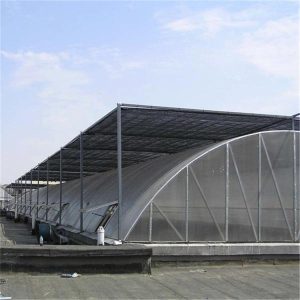
1. Two Core Concepts: Shade Percentage & Daily Light Integral (DLI)
What is shade net percentage
Shade percentage refers to the proportion of solar radiation blocked by the agricultural shade net. For example, a 50% shade net blocks half of sunlight while allowing 50% light to pass through for crops. A 35% shade net blocks 35% sunlight and transmits 65%, while a 75% shade net only keeps 25% light for plants.
Note: Higher weaving density brings higher shade percentage, but higher shade rate does not always mean better cooling effect. Crops need proper sunlight, and over‑shading will bring negative results.
DLI: Daily light “ration” for crops
DLI means the total amount of photosynthetically active radiation received by plants per day, measured in mol/m²/day. Every crop has its suitable DLI range.
- Low DLI: Insufficient light causes elongated thin stems, small leaves, delayed flowering and fewer fruits.
- High DLI: Excessive sunlight triggers high‑temperature stress, leaf scorch and plant wilting.
In most planting areas of India, open‑field DLI can reach 40‑50 mol/m²/day during hot bright seasons from March to June. Such intensity exceeds the suitable range for most vegetables and flowers, so shade nets are required to adjust DLI to ideal levels. Open‑field DLI varies in different regions. In plains such as Punjab and Haryana, summer DLI reaches 45‑55 mol/m²/day. In high‑altitude areas like Himachal Pradesh, summer DLI is only 30‑40 mol/m²/day, so lower shade percentage is preferred.
Based on open‑field DLI of 40 mol/m²/day, actual DLI under different shade nets is shown below:
| Shade Net Percentage | Blocked Light | Transmitted Light | Actual DLI | Main Application |
|---|---|---|---|---|
| 35% | 35% | 65% | About 26 | Sun‑loving vegetables such as tomato and sweet pepper |
| 50% | 50% | 50% | About 20 | Cucumber, leafy vegetables and seedling raising |
| 75% | 75% | 25% | About 10 | Shade‑loving flowers including gerbera, anthurium and orchid |
| 90% | 90% | 10% | About 4 | Orchid seedling acclimatization, mushroom cultivation, livestock shading, parking lot, rarely used for crop production |
2. Application Scenarios For 4 Common Shade Percentages
35% Shade Net: Mild Protection With Sufficient Sunlight
The 35% Shade Netting blocks one‑third of sunlight and reserves maximum natural light, mainly for protection against extreme midday strong sunlight. Suitable crops: Tomato, carrot, radish, sweet pepper. Tomato needs abundant light with suitable DLI of 30‑35 mol/m²/day, so 35% shade net is recommended during fruiting stage. Sweet pepper cannot stand high temperature; switch to 50% shade net when temperature stays above 35℃. Suitable scenarios: Temporary shading for open‑field farmland, sun protection in hot seasons from March to May. Remove the net to restore full sunlight in rainy seasons.
50% Shade Net: The Most Versatile Option
The 50% shade net is the most widely‑used specification in agriculture, balancing light supply and cooling performance. It covers a wide range of varieties. Choose 50% when you are not sure which percentage to pick. Suitable crops: Cucumber, lettuce, spinach, coriander, strawberry, rose cut‑flower; seedling raising for most vegetable varieties. Seedlings lack mature wax layers on leaves and are vulnerable to sunburn. 50% shade net is popular for seedling‑raising greenhouses to avoid heat damage while guaranteeing photosynthesis.
Reminder: Greenhouse film itself will block 10‑20% natural light. When installing inner shade net inside greenhouses, you have to count light loss from film to prevent insufficient light caused by double shading.
75% Shade Net: For Shade‑loving Flowers & Tissue‑cultured Seedlings
The 75% shade net creates low‑light environment. It is NOT fit for most vegetable planting. Under open‑field summer conditions, its DLI is around 10, lower than the minimum light requirement for vegetable growth. Suitable crops: Gerbera, anthurium, fern, orchid seedling, medicinal plant seedlings. Mostly used in flower nurseries and tissue‑culture seedling acclimatization to simulate cool forest‑like environment.
90% Shade Net: Near‑full Shading, Rarely Used In Agricultural Production
The 90% shade net blocks most sunlight with DLI of only 4 mol/m²/day. It is not applied for fruit and vegetable production. Common uses include mushroom growing, orchid seedling hardening, livestock shed shading, compost area and parking lot sun‑shielding.
3. Recommended Shade Percentage For Common Vegetables
| Vegetable Variety | Suitable DLI (mol/m²/day) | Recommended Shade Percentage | Adjustment In Hot Summer | Notes |
|---|---|---|---|---|
| Tomato | 30‑35 | 35% | Keep 35% | Sun‑loving crop; over‑shading causes yield drop |
| Sweet pepper | 14‑20 | 35‑50% | Switch to 50% under extreme heat | Blossom and fruit drop easily above 35℃ |
| Cucumber | 17‑20 | 50% | Keep 50% all year round | Prefers diffused light environment |
| Lettuce | 12‑17 | 50% | 50‑60% under extreme heat | Strong light triggers bolting and aging |
| Spinach | 10‑15 | 50% | 50% | Strong light makes leaves bitter |
| Coriander | 12‑15 | 50% | 50% | Bolts easily under strong sunlight |
| Carrot, Radish | 15‑20 | 35% | 35% | Adequate sunlight benefits root enlargement |
4. Crop Signals To Judge Whether Your Shade Net Works Well
Even with shade nets installed, mismatched shade percentage will bring obvious plant symptoms for quick adjustment:
- Elongated, lodging stems: Excessive shading with insufficient DLI, lower the shade percentage.
- Scorched spots and burned leaves: Light intensity is too high, increase shade percentage.
- Mass blossom and fruit drop: Mostly caused by strong‑light high‑temperature stress, add shading.
- Small leaves and stunted growth: Insufficient light, reduce shading.
- Slow growth and dwarf plants: DLI fails to meet crop minimum requirement.
- Wilting at noon with sufficient watering: Too strong solar radiation, add shade net.
- Delayed flowering: Imbalanced light condition, adjust shade percentage to match DLI demand.
Common mistakes: Apply high‑density seedling‑raising shade net on mature crops; ignore light‑blocking effect of greenhouse film; purchase only based on price without matching crop light demand.
5. ‑step Method To Calculate Required Shade Net Percentage
Simple formula for theoretical shade percentage:
Required shade percentage = 1 − (Target crop DLI ÷ Local open‑field DLI)
Case 1: Sweet pepper target DLI=20, summer open‑field DLI=40 1‑(20÷40)=0.5 → Choose 50% shade net.
Case 2: Tomato target DLI=30, open‑field DLI=45 1‑(30÷45)=0.33 → Choose 35% shade net.
Seasonal open‑field DLI reference:
- Summer (Mar‑Jun): 40‑50 mol/m²/day
- Rainy season (Jul‑Sep): 20‑30 mol/m²/day
- Winter (Oct‑Feb): 25‑35 mol/m²/day
6. Practical Operation Tips
- Aging performance of shade net: Under long‑term UV exposure, shading performance will decline year by year. A brand‑new 50% shade net may drop to 40‑45% actual shade rate after 3‑4 years of outdoor use. Choose products with UV‑stabilized additives for longer service life.
- Influence of net color: Under equal shade percentage, black, green and aluminized reflective nets deliver different cooling performance. Aluminized reflective nets reflect thermal radiation and reduce greenhouse temperature by 4‑8℃, ideal for high‑temperature greenhouses. Color does not change shade percentage value, it only adjusts light spectrum. Shade percentage is always the top priority.
- Difference between open‑field, greenhouse and nursery: Prefer 35% for temporary open‑field protection. When installing inner shade inside greenhouses, deduct light loss caused by greenhouse film. Seedlings need higher shade percentage than mature plants; reduce shading level after transplanting.
Conclusion
When choosing shade net, cooling effect is not the only target. The core is to match crop DLI light requirement. 35% fits sun‑loving fruits and vegetables, 50% is the safe general‑purpose option, 75% is for shade‑loving flowers, and 90% is mostly used for non‑production scenarios. Combine local seasonal sunlight intensity and planting patterns to maximize shade net value, mitigate heat damage while guaranteeing photosynthesis for stable and increased yield.
Professional agricultural shade net Manufacturer, Shandong Huifa Net Industry


 WhatsApp


