


Choosing the right shade net for a greenhouse is more than simply selecting a 50%, 70%, or 90% shade rate. The right product depends on the crop, local climate, sunlight intensity, greenhouse structure, installation method, and the level of heat and light that needs to be controlled.
For commercial greenhouse projects, the wrong shade net can result in insufficient light, excessive shading, poor ventilation, shorter service life, or unnecessary replacement costs.
For importers and greenhouse contractors, the challenge is even greater. A product that looks similar in a catalog may have significant differences in material, GSM, UV stabilization, mesh structure, dimensions, and manufacturing quality.
This guide explains the main factors buyers should consider before purchasing greenhouse shade netting and what to discuss with a professional shade net manufacturer.
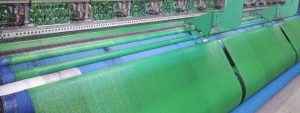
1. What Does Shade Rate Actually Mean?
Shade rate is usually the first specification buyers look at when purchasing a shade net.
Common commercial shade nets are available in different levels, including 30%, 50%, 60%, 70%, 80%, and 90% shading.
The shade rate generally indicates the proportion of sunlight that the net is designed to block.
However, a higher shade rate does not automatically mean a better product.
The correct shade rate depends on the crop and growing environment.
For example, a crop that requires high light levels may perform better under a 30% or 50% shade net, while crops or plants that are sensitive to strong sunlight may require 70%, 80%, or even higher shading.
A general reference for buyers
| Shade Rate | Typical Application |
|---|---|
| 30%–40% | Moderate sunlight protection and relatively high light transmission |
| 50%–60% | Balanced light and heat control for many agricultural applications |
| 70% | Stronger sunlight and heat protection |
| 80% | High shading requirements |
| 90% | Very strong sunlight reduction and specialized applications |
These ranges are only a general reference.
The final selection should consider the crop, local climate, greenhouse design, ventilation, and seasonal conditions.
For a commercial project, it is better to discuss the application with the manufacturer before placing a large order instead of choosing a shade rate based only on a product title.
2. Consider Your Local Climate and Sunlight
The same shade net may not be suitable for every climate.
A greenhouse located in a hot, high-solar-radiation region may require stronger shading than a greenhouse in a cooler area.
For example, a greenhouse in a region with intense summer sunlight may need a shade net that provides stronger solar protection while still allowing sufficient airflow.
On the other hand, excessive shading in a region with limited sunlight can reduce the amount of light available to the crop.
Before choosing a product, buyers should consider:
- Local solar radiation
- Summer temperature
- Seasonal changes
- Crop type
- Greenhouse ventilation
- Installation location
- Expected operating period
- Whether the net will be installed permanently or seasonally
A good manufacturer should not simply ask, "What shade rate do you want?"
The manufacturer should also understand why you need the shade net and where it will be used.
3. Why Virgin HDPE Matters
Material quality is an important factor when purchasing agricultural shade netting.
High-quality shade nets are commonly manufactured from HDPE, or high-density polyethylene.
For commercial outdoor applications, buyers may specifically request virgin HDPE because it can provide more consistent material properties compared with lower-quality recycled materials.
However, material alone does not determine the final quality of a shade net.
The finished product also depends on:
- Yarn quality
- Mesh construction
- GSM
- UV stabilization
- Manufacturing process
- Production equipment
- Quality control
This is why two shade nets with the same advertised shade rate can have different performance and service life.
When comparing suppliers, buyers should ask for a complete specification rather than comparing only the price per kilogram or price per roll.
4. UV Stabilization Is Critical for Outdoor Shade Nets
Greenhouse shade nets are exposed to sunlight for long periods.
Ultraviolet radiation can gradually degrade plastic materials and affect their strength and flexibility.
For long-term outdoor applications, UV stabilization is therefore an important part of the product specification.
Before purchasing, ask the manufacturer:
- Is the material UV stabilized?
- Is the product designed for long-term outdoor use?
- What type of raw material is used?
- What environmental conditions is the product designed for?
- Can the supplier provide technical specifications?
- Can samples be provided before bulk production?
A cheaper shade net may not necessarily be cheaper in the long run.
If the product has a shorter service life and needs to be replaced earlier, the total project cost can become significantly higher.
5. GSM and Mesh Structure: Two Specifications Buyers Should Not Ignore
Shade rate is important, but it is not the only specification that determines product performance.
GSM, meaning grams per square meter, is commonly used to describe the weight of the net.
A higher GSM generally means more material is used per square meter, but GSM should not be used alone to judge product quality.
Mesh structure is also important.
The construction of the net can affect:
- Tensile strength
- Air permeability
- Light transmission
- Weight
- Handling
- Installation
- Durability
For large greenhouse projects, buyers should evaluate the complete specification rather than selecting a product based only on the advertised shade percentage.
6. Choose the Correct Width and Roll Length
Dimensions are particularly important for commercial greenhouse projects.
A shade net may be available in standard widths, but many professional buyers require customized dimensions to match their greenhouse structure.
Before placing an order, confirm:
- Finished width
- Roll length
- Number of rolls
- Installation direction
- Required overlap
- Cutting requirements
- Packaging method
Customized dimensions can help reduce installation waste and make the installation process more efficient.
For large projects, buyers can provide the manufacturer with greenhouse dimensions or a basic project layout.
The factory can then help determine a practical roll configuration.
7. Does Shade Net Color Matter?
Shade nets can be manufactured in different colors depending on the product design and application.
Black shade net is widely used for strong solar protection, while green and other colors may be selected for specific agricultural, horticultural, landscaping, or commercial applications.
For buyers purchasing directly from a manufacturer, customized colors may also be available depending on the product and order quantity.
However, color should not be considered separately from the shade rate, material, and mesh structure.
The most important consideration is whether the complete product specification is suitable for the intended application.
8. Buying Shade Net Directly From a China Manufacturer
For importers, distributors, greenhouse companies, and agricultural contractors, buying directly from a manufacturer can provide advantages beyond the purchase price.
A factory can communicate directly with the buyer about:
- Product specifications
- Shade rate
- Width and length
- GSM
- Color
- Mesh structure
- UV stabilization
- Packaging
- Production schedule
- Quality control
- Container loading
- OEM requirements
This becomes especially important for large projects where consistent specifications are required across multiple production batches.
How can you tell whether a supplier is a real factory?
Before placing a large order, buyers can ask:
- Where is the production facility located?
- Can the supplier provide factory photos or production videos?
- What production machines are used?
- Which products are manufactured in-house?
- Can the factory produce customized widths and colors?
- How is product quality inspected?
- How are the rolls packaged for export?
- Can the supplier provide samples before bulk production?
A genuine manufacturer should be able to provide clear answers and relevant production information.
9. What Information Should You Send When Requesting a Quotation?
The more complete your requirements are, the easier it is for a manufacturer to provide an accurate quotation.
For a greenhouse shade net project, buyers should ideally provide:
| Specification | Example |
|---|---|
| Product | Agricultural Shade Net |
| Material | Virgin HDPE |
| Shade Rate | 50%, 70%, 80%, etc. |
| GSM | Required GSM |
| Width | Required finished width |
| Length | Required roll length |
| Color | Black / Green / Custom |
| UV Stabilization | Required |
| Quantity | Rolls or total square meters |
| Application | Greenhouse / Agriculture |
| Destination | Country / Port |
| Packaging | Export packaging |
For large projects, buyers can also provide greenhouse dimensions, drawings, photos, or installation requirements.
This allows the manufacturer to recommend a more practical specification instead of simply offering a standard product.
10. Do Not Compare Shade Net Prices Before Comparing Specifications
One of the most common mistakes in international purchasing is comparing prices before confirming whether the products are actually equivalent.
For example:
Supplier A quotes $100 per roll.
Supplier B quotes $120 per roll.
At first glance, Supplier A appears cheaper.
But what if Supplier A's roll is smaller, has a lower GSM, uses different material, or has different UV stabilization?
The price comparison is no longer meaningful.
Before comparing quotations, confirm:
- Material
- Shade rate
- GSM
- Width
- Length
- Mesh structure
- UV stabilization
- Packaging
- Quantity
- Trade terms
The correct approach is:
Compare specification with specification, not simply price with price.
11. Custom Shade Net for Wholesale and Project Orders
For distributors, importers, greenhouse contractors, and agricultural projects, standard products are not always the most efficient solution.
Depending on the product and order quantity, a manufacturer may be able to customize:
- Shade rate
- Width
- Length
- Color
- Mesh density
- GSM
- Packaging
- Private labeling or OEM requirements
Customization can be particularly useful when the buyer has specific greenhouse dimensions or needs consistent products for repeated projects.
Instead of asking only:
"What is your price for shade net?"
A professional buyer can provide:
"We need 70% shade net, virgin HDPE, 6 m width, 50 m rolls, black color, UV stabilized, 20,000 m² for a greenhouse project in [country]."
This gives the factory enough information to prepare a much more useful quotation.
12. Huifa Nets — Shade Net Manufacturer and Factory in China
Huifa Nets manufactures shade nets and other plastic netting products in China for agricultural, horticultural, construction, and outdoor applications.
As a China manufacturer and factory, Huifa Nets works with buyers who need standard products as well as customized specifications.
For wholesale and project orders, buyers can discuss:
- Shade rate
- Material
- GSM
- Width
- Length
- Color
- Mesh density
- UV stabilization
- Packaging
- Custom requirements
The goal is not simply to supply a standard roll of shade net, but to provide a specification that matches the buyer's actual application and project requirements.
If you are sourcing shade net from China, send us your required shade rate, dimensions, quantity, application, and destination.
Our team can review your requirements and provide a suitable factory quotation.
Request a Quote for Shade Net →
Conclusion
Choosing the right greenhouse shade net requires more than selecting a number such as 50%, 70%, or 90%.
A professional purchasing decision should consider:
Crop + Climate + Shade Rate + Material + UV Stabilization + GSM + Mesh Structure + Dimensions + Installation + Project Requirements
For importers and commercial greenhouse buyers, working directly with a manufacturer can also make customization, quality control, and production communication easier.
If you are planning a greenhouse project or importing shade nets in bulk, send your requirements to a professional manufacturer before making your final purchasing decision.
The right specification can help you avoid unnecessary cost, improve installation efficiency, and ensure that the shade net is suitable for the actual growing environment.


 WhatsApp


