


The construction industry is highly risk-sensitive, where any on-site malfunction or regulatory violation can trigger severe consequences, including project schedule delays, occupational safety accidents, legal disputes, and permanent damage to corporate brand credibility. For this reason, it is imperative for construction material wholesalers and distributors to source scaffolding nets that meet strict safety specifications and regulatory standards. This article analyzes the potential risks and economic losses caused by non-compliant scaffolding nets, and illustrates why huifa stands out as a reliable and top-priority supplier for scaffolding net procurement.
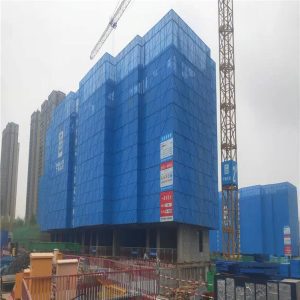
Hidden Costs of Using Non-Compliant Scaffolding Nets
Professional bulk purchasers of scaffolding nets never focus solely on unit prices. In most cases, products priced far below the industry average are manufactured with recycled raw materials and lack sufficient UV stabilizers, resulting in substandard overall quality and hidden dangers that bring multiple invisible costs.
1. Regulatory Penalties and On-Site Suspension
Many regions with stringent construction regulations, such as Europe, Australia and the Middle East, enforce a zero-tolerance policy for uncertified scaffolding nets by safety supervision authorities. If the scaffolding nets fail to meet national engineering safety standards, construction contractors will face mandatory site shutdowns and substantial administrative fines. Meanwhile, suppliers who provide unqualified products will suffer irreversible damage to their market reputation and lose customer trust.
2. Frequent Replacement and Extra Operational Costs
Scaffolding nets made from recycled materials are poor in weather resistance. Under long-term solar radiation and outdoor exposure, they are prone to cracking and tearing within 3 to 6 months of use. Construction enterprises have to spend extra labor and time on repeated replacement and installation, which greatly increases project operating costs. Additionally, frequent quality problems will reduce customer repurchase willingness, directly affecting the long-term business development of suppliers.
3. Safety Hazards and Joint Legal Liabilities
Low-quality, non-compliant scaffolding nets feature insufficient tensile strength and load-bearing capacity, and can tear easily during construction use. This poses a serious threat to the personal safety of construction workers and passing pedestrians. In the event of safety accidents or casualties, construction companies will bear huge compensation liabilities. Worse still, suppliers who sell uncertified substandard products will be held jointly legally responsible for the accidents, facing legal investigations and economic losses.
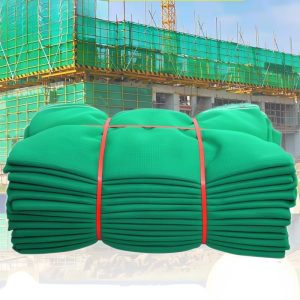
Key Standards to Verify Scaffolding Net Quality Before Bulk Procurement
Bulk procurement of scaffolding nets involves complicated procurement procedures and quality inspection links. To ensure the stable supply of high-quality and export-qualified products, purchasers must conduct strict factory qualification and product standard verification before placing formal orders.
1. Compliance with BS 7955:1999 Certification
BS 7955:1999 is the core and basic safety standard for construction scaffolding and safety nets. It strictly regulates the tensile strength, impact resistance and other core performance indicators of scaffolding nets. Before confirming bulk orders, purchasers must ask manufacturers to provide official test reports to verify that the products fully meet this international standard, so as to avoid unqualified products entering the construction site.
2. Conformity with EU REACH Regulations
For products exported to the European Union, compliance with REACH regulations is a mandatory requirement. This regulation ensures that the HDPE particles and masterbatches used in scaffolding net production do not contain high-concern SVHC substances. Equipped with valid REACH certification, products can smoothly pass EU customs clearance, effectively avoiding cargo detention, customs delays and additional demurrage losses caused by non-compliance.


 WhatsApp


